
Thinking Isn’t an Illusion
Overcoming the Limitations of Reasoning Models via Tool Augmentations
DOI:
https://doi.org/10.70777/si.v2i6.15961Keywords:
Large Reasoning Models (LRMs), Large Language Models (LLMs), LLM Tool Augmentation, Chain-of-Thought (CoT), Program-of-Thought (PoT), LLM Reasoning Tasks, Apple Thinking-Illusion Benchmark, AI Task ComplexityAbstract
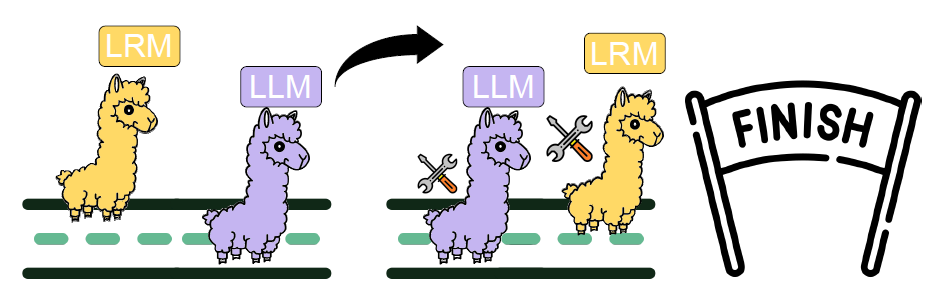
Large Reasoning Models (LRMs) have become a central focus in today’s large language model (LLM) research, where models are designed to output a step-by-step thinking process before arriving at a final answer to handle complex reasoning tasks. Despite their promise, recent empirical studies (e.g., [Shojaee et al., 2025] from Apple) suggest that this thinking process may not actually enhance reasoning ability, where LLMs without explicit reasoning actually outperform LRMs on tasks with low or high complexity. In this work, we revisit these findings and investigate whether the limitations of LRMs persist when tool augmentations are introduced. We incorporate two types of tools, Python interpreters and scratchpads, and evaluate three representative LLMs and their LRM counterparts on Apple’s benchmark reasoning puzzles. Our results show that, with proper tool use, LRMs consistently outperform their non-reasoning counterparts across all levels of task complexity. These findings challenge the recent narrative that reasoning is an illusion and highlight the potential of tool-augmented LRMs for solving complex problems. Our source code is available at https: //github.com/magiclinux/thinking_is_not_an_illusion.
References
[AAA+23] Josh Achiam, Steven Adler, Sandhini Agarwal, Lama Ahmad, Ilge Akkaya, Florencia Leoni Aleman, Diogo Almeida, Janko Altenschmidt, Sam Altman, Shyamal Anadkat, et al. Gpt-4 technical report. arXiv preprint arXiv:2303.08774, 2023.
[Ant24] Anthropic. The claude 3 model family: Opus, sonnet, haiku, 2024. https: //www-cdn.anthropic.com/de8ba9b01c9ab7cbabf5c33b80b7bbc618857627/ Model_Card_Claude_3.pdf.
[BBK+24] Maciej Besta, Nils Blach, Ales Kubicek, Robert Gerstenberger, Michal Podstawski, Lukas Gianinazzi, Joanna Gajda, Tomasz Lehmann, Hubert Niewiadomski, Piotr Nyczyk, et al. Graph of thoughts: Solving elaborate problems with large language models. In Proceedings of the AAAI conference on artificial intelligence (AAAI), volume 38:16, pages 17682–17690, 2024.
[BMR+20] Tom Brown, Benjamin Mann, Nick Ryder, Melanie Subbiah, Jared D Kaplan, Prafulla Dhariwal, Arvind Neelakantan, Pranav Shyam, Girish Sastry, Amanda Askell, et al. Language models are few-shot learners. Advances in neural information processing systems (NeurIPS), 33:1877–1901, 2020.
[CKK+24] Hyungjoo Chae, Yeonghyeon Kim, Seungone Kim, Kai Ong, Beong-woo Kwak, Moohyeon Kim, Sunghwan Mac Kim, Taeyoon Kwon, Jiwan Chung, Youngjae Yu, et al. Language models as compilers: Simulating pseudocode execution improves algorithmic reasoning in language models. In Proceedings of the 2024 Conference on Empirical Methods in Natural Language Processing (EMNLP), pages 22471–22502, 2024.
[CLLF24] Guoxin Chen, Minpeng Liao, Chengxi Li, and Kai Fan. Alphamath almost zero: process supervision without process. Advances in Neural Information Processing Systems (NeurIPS), 37:27689–27724, 2024.
[CMWC23] Wenhu Chen, Xueguang Ma, Xinyi Wang, and William W. Cohen. Program of thoughts prompting: Disentangling computation from reasoning for numerical reasoning tasks. Transactions on Machine Learning Research (TMLR), 2023.
[CQT+24] Yukang Chen, Shengju Qian, Haotian Tang, Xin Lai, Zhijian Liu, Song Han, and Jiaya Jia. LongloRA: Efficient fine-tuning of long-context large language models. In The Twelfth International Conference on Learning Representations (ICLR), 2024.
[CXL+24] Xingyu Chen, Jiahao Xu, Tian Liang, Zhiwei He, Jianhui Pang, Dian Yu, Linfeng Song, Qiuzhi Liu, Mengfei Zhou, Zhuosheng Zhang, et al. Do not think that much for 2+3=? on the overthinking of o1-like llms. arXiv preprint arXiv:2412.21187, 2024.
[DZDT24] Zhengxiao Du, Aohan Zeng, Yuxiao Dong, and Jie Tang. Understanding emergent abilities of language models from the loss perspective. Advances in neural information processing systems (NeurIPS), 37:53138–53167, 2024.
[GJR+24] Sachin Goyal, Ziwei Ji, Ankit Singh Rawat, Aditya Krishna Menon, Sanjiv Kumar, and Vaishnavh Nagarajan. Think before you speak: Training language models with pause tokens. In The Twelfth International Conference on Learning Representations (ICLR), 2024.
[GRS+23] Angeliki Giannou, Shashank Rajput, Jy-yong Sohn, Kangwook Lee, Jason D Lee, and Dimitris Papailiopoulos. Looped transformers as programmable computers. In International Conference on Machine Learning (ICML), pages 11398–11442. PMLR, 2023.
[GYZ+25] Daya Guo, Dejian Yang, Haowei Zhang, Junxiao Song, Ruoyu Zhang, Runxin Xu, Qihao Zhu, Shirong Ma, Peiyi Wang, Xiao Bi, et al. Deepseek-r1: Incentivizing reasoning capability in llms via reinforcement learning. arXiv preprint arXiv:2501.12948, 2025.
[JYX+23] Ziwei Ji, Tiezheng Yu, Yan Xu, Nayeon Lee, Etsuko Ishii, and Pascale Fung. Towards mitigating llm hallucination via self reflection. In Findings of the Association for Computational Linguistics: EMNLP 2023, pages 1827–1843, 2023.
[KS25] Juno Kim and Taiji Suzuki. Transformers provably solve parity efficiently with chain of thought. In The Thirteenth International Conference on Learning Representations (ICLR), 2025.
[LFX+24] Aixin Liu, Bei Feng, Bing Xue, Bingxuan Wang, Bochao Wu, Chengda Lu, Chenggang Zhao, Chengqi Deng, Chenyu Zhang, Chong Ruan, et al. Deepseek-v3 technical report. arXiv preprint arXiv:2412.19437, 2024.
[LGZ+25] Runze Liu, Junqi Gao, Jian Zhao, Kaiyan Zhang, Xiu Li, Biqing Qi, Wanli Ouyang, and Bowen Zhou. Can 1b llm surpass 405b llm? rethinking compute-optimal test-time scaling. arXiv preprint arXiv:2502.06703, 2025.
[LLZM24] Zhiyuan Li, Hong Liu, Denny Zhou, and Tengyu Ma. Chain of thought empowers transformers to solve inherently serial problems. In The Twelfth International Conference on Learning Representations (ICLR), 2024.
[LT24] AI @ Meta Llama Team. The llama 3 herd of models. arXiv preprint arXiv:2407.21783, 2024.
[MAS+25] Seyed Iman Mirzadeh, Keivan Alizadeh, Hooman Shahrokhi, Oncel Tuzel, Samy Bengio, and Mehrdad Farajtabar. GSM-symbolic: Understanding the limitations of mathematical reasoning in large language models. In The Thirteenth International Conference on Learning Representations (ICLR), 2025.
[MGF+24] Brandon McKinzie, Zhe Gan, Jean-Philippe Fauconnier, Sam Dodge, Bowen Zhang, Philipp Dufter, Dhruti Shah, Xianzhi Du, Futang Peng, Floris Weers, et al. Mm1: Methods, analysis & insights from multimodal llm pre-training. arXiv preprint arXiv:2403.09611, 2024.
[NHB+21] Reiichiro Nakano, Jacob Hilton, Suchir Balaji, Jeff Wu, Long Ouyang, Christina Kim, Christopher Hesse, Shantanu Jain, Vineet Kosaraju, William Saunders, et al. Webgpt: Browser-assisted question-answering with human feedback. arXiv preprint arXiv:2112.09332, 2021.
[Ope24] OpenAI. Introducing openai o1-preview. https://openai.com/index/ introducing-openai-o1-preview/, 2024. Accessed: September 12.
[Ope25] OpenAI. Introducing o3 and o4 mini. https://openai.com/index/ introducing-o3-and-o4-mini/, 2025. Accessed: July 18.
[PPV+24] Mihir Parmar, Nisarg Patel, Neeraj Varshney, Mutsumi Nakamura, Man Luo, Santosh Mashetty, Arindam Mitra, and Chitta Baral. Logicbench: Towards systematic evaluation of logical reasoning ability of large language models. In Proceedings of the 62nd Annual Meeting of the Association for Computational Linguistics (ACL), pages 13679–13707, 2024.
[QYS+25] Yuxiao Qu, Matthew YR Yang, Amrith Setlur, Lewis Tunstall, Edward Emanuel Beeching, Ruslan Salakhutdinov, and Aviral Kumar. Optimizing test-time compute via meta reinforcement fine-tuning. In Forty-second International Conference on Machine Learning (ICML), 2025.
[SCW+25] Yang Sui, Yu-Neng Chuang, Guanchu Wang, Jiamu Zhang, Tianyi Zhang, Jiayi Yuan, Hongyi Liu, Andrew Wen, Shaochen Zhong, Hanjie Chen, et al. Stop overthinking: A survey on efficient reasoning for large language models. arXiv preprint arXiv:2503.16419, 2025.
[SDYD+23] Timo Schick, Jane Dwivedi-Yu, Roberto Dessi, Roberta Raileanu, Maria Lomeli, Eric Hambro, Luke Zettlemoyer, Nicola Cancedda, and Thomas Scialom. Toolformer: Language models can teach themselves to use tools. Advances in Neural Information Processing Systems (NeurIPS), 36:68539–68551, 2023.
[SLXK25] Charlie Victor Snell, Jaehoon Lee, Kelvin Xu, and Aviral Kumar. Scaling LLM testtime compute optimally can be more effective than scaling parameters for reasoning. In The Thirteenth International Conference on Learning Representations (ICLR), 2025.
[SMA+25] Parshin Shojaee, Iman Mirzadeh, Keivan Alizadeh, Maxwell Horton, Samy Bengio, and Mehrdad Farajtabar. The illusion of thinking: Understanding the strengths and limitations of reasoning models via the lens of problem complexity. arXiv preprint arXiv:2506.06941, 2025.
[SMK23] Rylan Schaeffer, Brando Miranda, and Sanmi Koyejo. Are emergent abilities of large language models a mirage? Advances in neural information processing systems (NeurIPS), 36:55565–55581, 2023.
[SWZ+24] Zhihong Shao, Peiyi Wang, Qihao Zhu, Runxin Xu, Junxiao Song, Xiao Bi, Haowei Zhang, Mingchuan Zhang, YK Li, Yang Wu, et al. Deepseekmath: Pushing the limits of mathematical reasoning in open language models. arXiv preprint arXiv:2402.03300, 2024.
[SXK+22] Kurt Shuster, Jing Xu, Mojtaba Komeili, Da Ju, Eric Michael Smith, Stephen Roller, Megan Ung, Moya Chen, Kushal Arora, Joshua Lane, et al. Blenderbot 3: a deployed conversational agent that continually learns to responsibly engage. arXiv preprint arXiv:2208.03188, 2022.
[TDFH+22] Romal Thoppilan, Daniel De Freitas, Jamie Hall, Noam Shazeer, Apoorv Kulshreshtha, Heng-Tze Cheng, Alicia Jin, Taylor Bos, Leslie Baker, Yu Du, et al. Lamda: Language models for dialog applications. arXiv preprint arXiv:2201.08239, 2022.
[WCY+24] Xingyao Wang, Yangyi Chen, Lifan Yuan, Yizhe Zhang, Yunzhu Li, Hao Peng, and Heng Ji. Executable code actions elicit better llm agents. In Forty-first International Conference on Machine Learning (ICLR), 2024.
[WRH+22] Thomas Wang, Adam Roberts, Daniel Hesslow, Teven Le Scao, Hyung Won Chung, Iz Beltagy, Julien Launay, and Colin Raffel. What language model architecture and pretraining objective works best for zero-shot generalization? In International Conference on Machine Learning (ICML), pages 22964–22984. PMLR, 2022.
[WWS+22] JasonWei, XuezhiWang, Dale Schuurmans, Maarten Bosma, Fei Xia, Ed Chi, Quoc V Le, Denny Zhou, et al. Chain-of-thought prompting elicits reasoning in large language models. Advances in neural information processing systems (NeurIPS), 35:24824– 24837, 2022.
[YLY+25] An Yang, Anfeng Li, Baosong Yang, Beichen Zhang, Binyuan Hui, Bo Zheng, Bowen Yu, Chang Gao, Chengen Huang, Chenxu Lv, et al. Qwen3 technical report. arXiv preprint arXiv:2505.09388, 2025.
[YYZ+23] Shunyu Yao, Dian Yu, Jeffrey Zhao, Izhak Shafran, Tom Griffiths, Yuan Cao, and Karthik Narasimhan. Tree of thoughts: Deliberate problem solving with large language models. Advances in neural information processing systems (NeurIPS), 36:11809– 11822, 2023.
[ZGG+24] Wanjun Zhong, Lianghong Guo, Qiqi Gao, He Ye, and Yanlin Wang. Memorybank: Enhancing large language models with long-term memory. In Proceedings of the AAAI Conference on Artificial Intelligence (AAAI), volume 38:17, pages 19724–19731, 2024.
[ZHX+24] Andrew Zhao, Daniel Huang, Quentin Xu, Matthieu Lin, Yong-Jin Liu, and Gao Huang. Expel: Llm agents are experiential learners. In Proceedings of the AAAI Conference on Artificial Intelligence (AAAI), volume 38:17, pages 19632–19642, 2024.
[ZWL+25] Lili Zhao, Yang Wang, Qi Liu, Mengyun Wang, Wei Chen, Zhichao Sheng, and Shijin Wang. Evaluating large language models through role-guide and self-reflection: A comparative study. In The Thirteenth International Conference on Learning Representations (ICLR), 2025.
[ZWMG22] Eric Zelikman, Yuhuai Wu, Jesse Mu, and Noah Goodman. Star: Bootstrapping reasoning with reasoning. Advances in Neural Information Processing Systems (NeurIPS), 35:15476–15488, 2022.
[ZYW+23] Yuchen Zhuang, Yue Yu, Kuan Wang, Haotian Sun, and Chao Zhang. Toolqa: A dataset for llm question answering with external tools. Advances in Neural Information Processing Systems (NeurIPS), 36:50117–50143, 2023.
Downloads
Published
How to Cite
Issue
Section
Categories
License
Copyright (c) 2025 Zhao Song, Song Yue, Jiahao Zhang

This work is licensed under a Creative Commons Attribution-NoDerivatives 4.0 International License.


