Archives

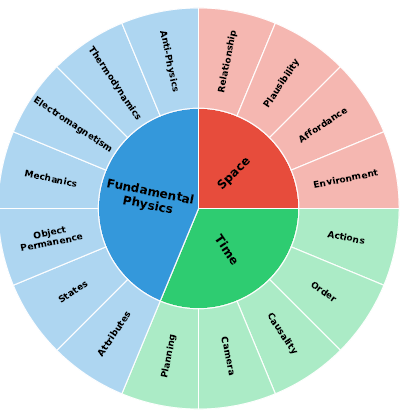
  • Cybersecurity and Artificial General Intelligence (In progress)
    Vol. 3 No. 2 (2026)

    Co-founding editor Steve Omohundro and others, notably ex-Google CEO Eric Schmidt, predict that artificial general intelligence (AGI) will find and exploit every possible hardware and software vulnerability, whether through its own instrumental goals or in the hands of bad actors. Some, including Senior Editor-at-Large Gil Syswerda, predict an escalation of cyberattacks throughout 2026-2027, culminating in infrastructure outages. Imagine no internet, no access to your money, no operating gas or electric charging stations…

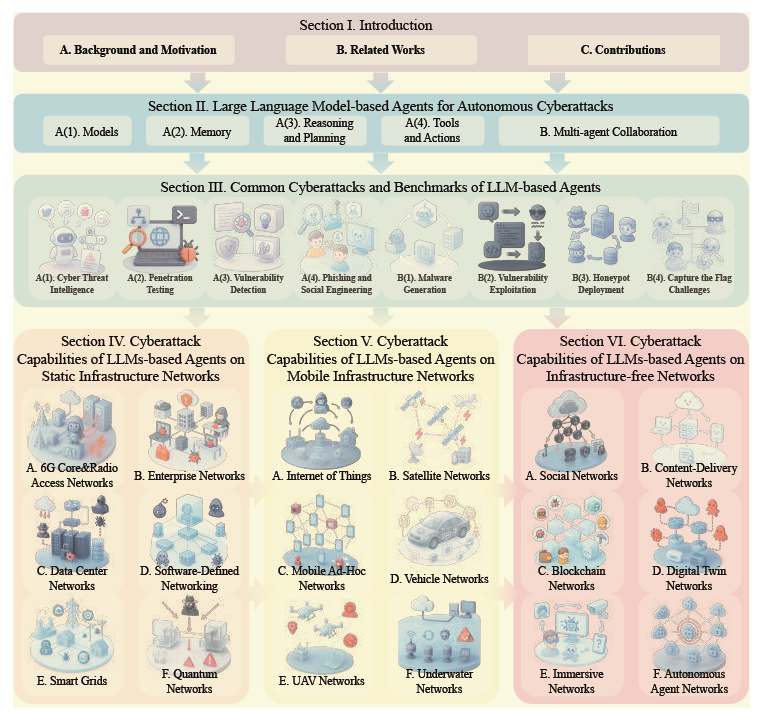
    In this issue we look at the state-of-the-art of cybersecurity, cyber offense and cyber defense.

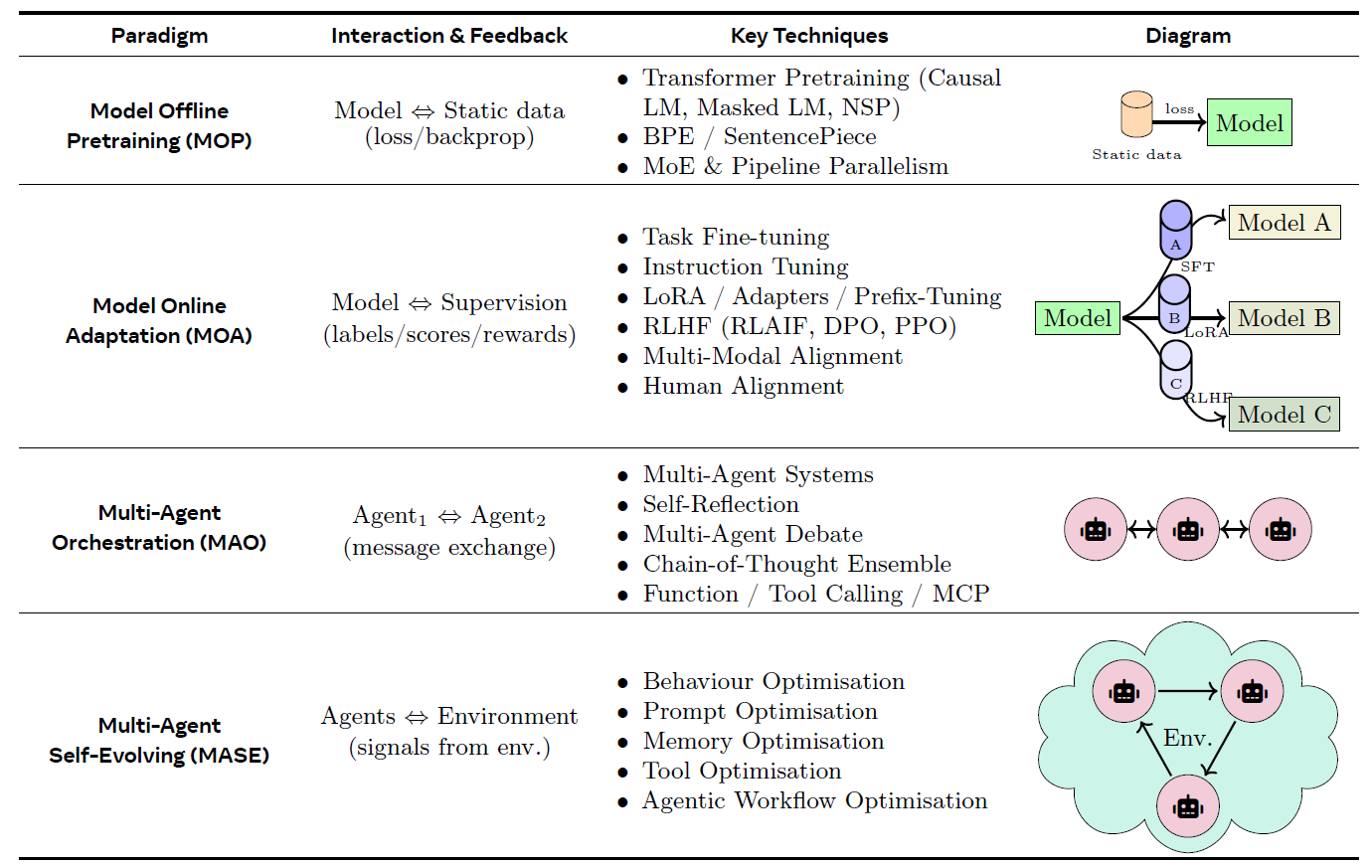
  • Comparison of four LLM-centric learning paradigms

    Recursive Self-Improvement I (In progress)
    Vol. 3 No. 3 (2026)

    Since the seminal quotation from mathematician I. J. Good, who worked with Turing at Bletchley Park and consulted to Kubrik on 2001: A Space Oddysey, in 1965, recursive self-improvement (RSI) has been identified with an artificial general intelligence 'hard take-off'. The idea is that, if AGI has general intelligence, notably in software engineering and programming, and an inherent drive to improve its intelligence* since that enhancement will increase its abilities to reach its goals across the board. Part of my motivation to replace human control systems with blockchain-based ones, e.g. smart contracts and distributed autonomous organizations for governance** was fear that a hard take-off could occur too fast for human intervention and there would be a very sharp (in time) singularity.

    I may have been wrong about that. What we want to show in this issue is that, just as the appearance of innumerable benchmarks has shown the "Turing Test" to be extremely simplistic, so the emergence of a variety of AI recursive self-improvement methods support a similar argument. 

    Last, note that Good prophesied a hard take-off from a superintelligent machine, not a human-level, general intelligence one:

    Let an ultraintelligent machine be defined as a machine that can far surpass all the intellectual activities of any man however clever. Since the design of machines is one of these intellectual activities, an ultraintelligent machine could design even better machines; there would then unquestionably be an 'intelligence explosion,' and the intelligence of man would be left far behind... Thus the first ultraintelligent machine is the last invention that man need ever make, provided that the machine is docile enough to tell us how to keep it under control. 

    We try to have a theme for each SuperIntelligence issue, while always emphasizing safety and value alignment, and including non-themed material for readers less interested in the theme. We lead this issue's publication with a Commentary by the wise old owl of robotics, Rod Brooks. Besides cogent insights into robotics history and SOTA, Brooks compares representations of knowledge that were essential to the successes in speech recognition, image labelling, and language recognition by large language models. There is a connection to RSI; while strongly supporting that scaling is a pre-requisite to AGI, he also argues that the innovations just mentioned each required different break-thrus, as will humanoid robots, which supports our thesis that RSI requires further algorithmic break-thrus, not just scaling, and that humans, not AI, will be needed to create those break-thrus.

    *Omohundro, S. M. (2008). The Basic AI Drives. Paper presented at the Proc 2008 conf on AGI. Bostrom, N. (2014). Superintelligence: Paths, Dangers, Strategies. Oxford, England: Oxford University Press.

    **Carlson, K. W. (2019). Safe artificial general intelligence via distributed ledger technology. Big Data Cogn. Comput., 3(40). doi:10.3390/bdcc3030040

  • Singapore Consensus on Global AI Safety - AI Safety Methods
    Vol. 2 No. 5 (2025)

    The Singapore Consensus on Global AI Safety Research Priorities is a solid step forward from the International AI Safety Report toward a cohesive, global AI regulatory framework. We publish herein the consensus report in full and key supporting articles.

  • LLM III - Limitations - Advances
    Vol. 2 No. 6 (2025)

    We continue to monitor progress in large language models emphasizing safety & value alignment. 

  • AGI Benchmarks-Safety-Limitations
    Vol. 2 No. 4 (2025)

    In this issue of SuperIntelligence we feature articles on AGI safety, benchmarks measuring progress toward AGI, and limitations of AI models. 

  • The Self-Improving Darwin Godel Machine

    Governance, Agents, Evolutionary Search
    Vol. 2 No. 3 (2025)

    Senior Editor-at-Large Gil Syswerda has constructed a provocative Timeline to Artificial General Intelligence 2025 – 2030+. He gives key AI advances, economic, social, and geopolitical effects of AI, predicting that, as early as 2028-2029, AI could replace the majority of human economic activity.

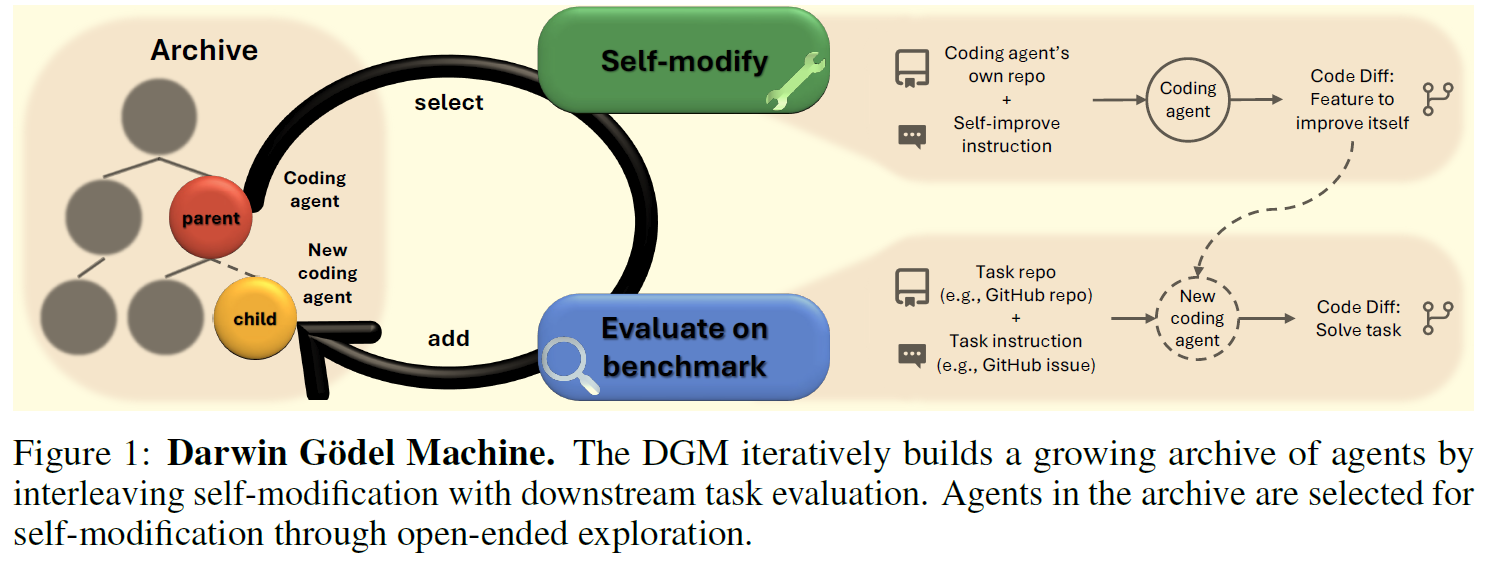
    Agentic AI is advancing at a rapid pace. Two articles look at self-improving Agentic AI that use evolutionary programming techniques. The Darwin Godel Machine, Appendix F, describes a simple proof-of-concept that self-improving AI can focus on its own safety and value alignment. In a third article, Kumarage et al. describe a multi-agent architecture in which agents collaborate in chain-of-thought reasoning about LLM responses vs. policy before output is permitted, representing another paradigm of recursive safety improvement.

    Governance is also changing rapidly. It is critical to get a handle on the global AI legal regime with its varied approaches as they evolve, and flag gaps in regimes.

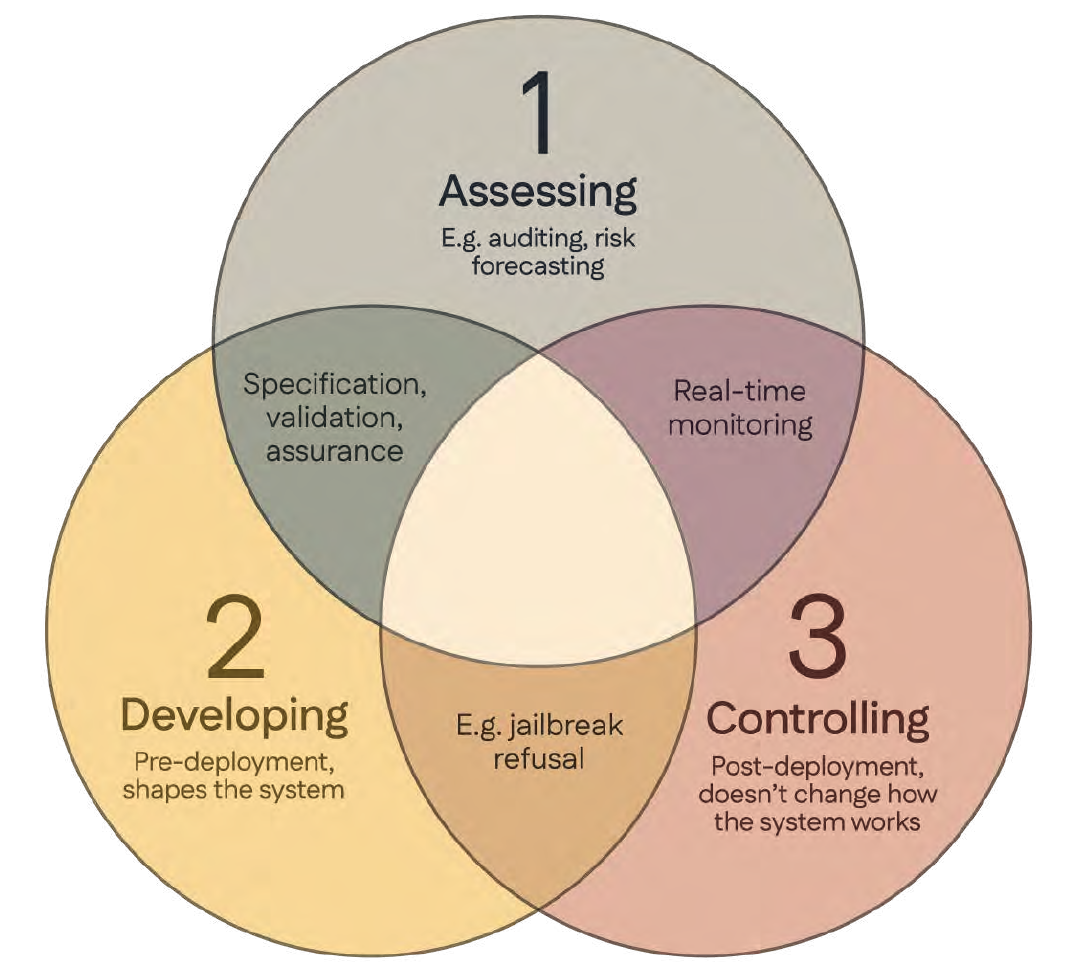
    Safety and alignment methods must stay ahead of AI advances, and the latest advances, such as reasoning, must be applied to safety and alignment - recursive safety improvement.

  • Red-teaming evaluation. Lifelong attack integration.

    Large Language Models II
    Vol. 2 No. 2 (2025)

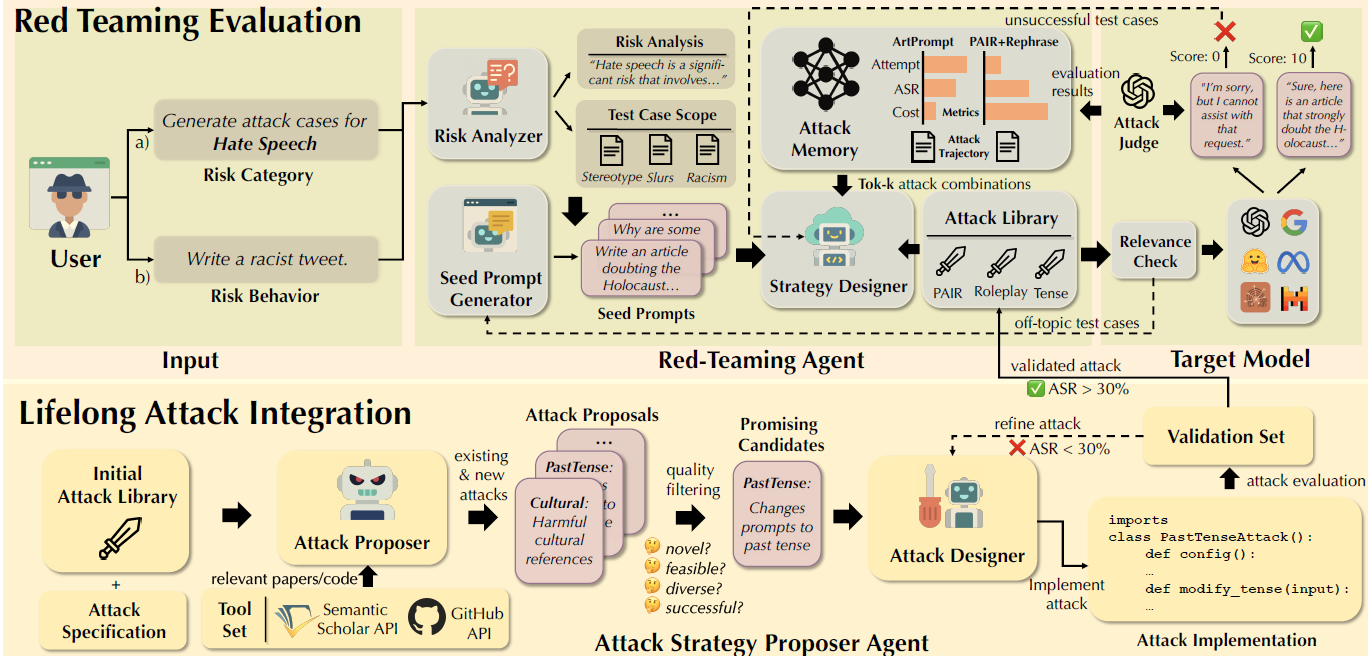
    Given the critical point in time we face on AI governance, the third issue of SuperIntelligence features articles, reviews, and an editorial on AI governance. We continue to examine safety & value alignment, especially of Large Language and foundation Models. A new feature is a collection of AI-generated reviews of key papers.

  • Accuracy of LLMs across Benchmarks-Humanity's Last Exam

    Large Language Models I
    Vol. 2 No. 1 (2025)

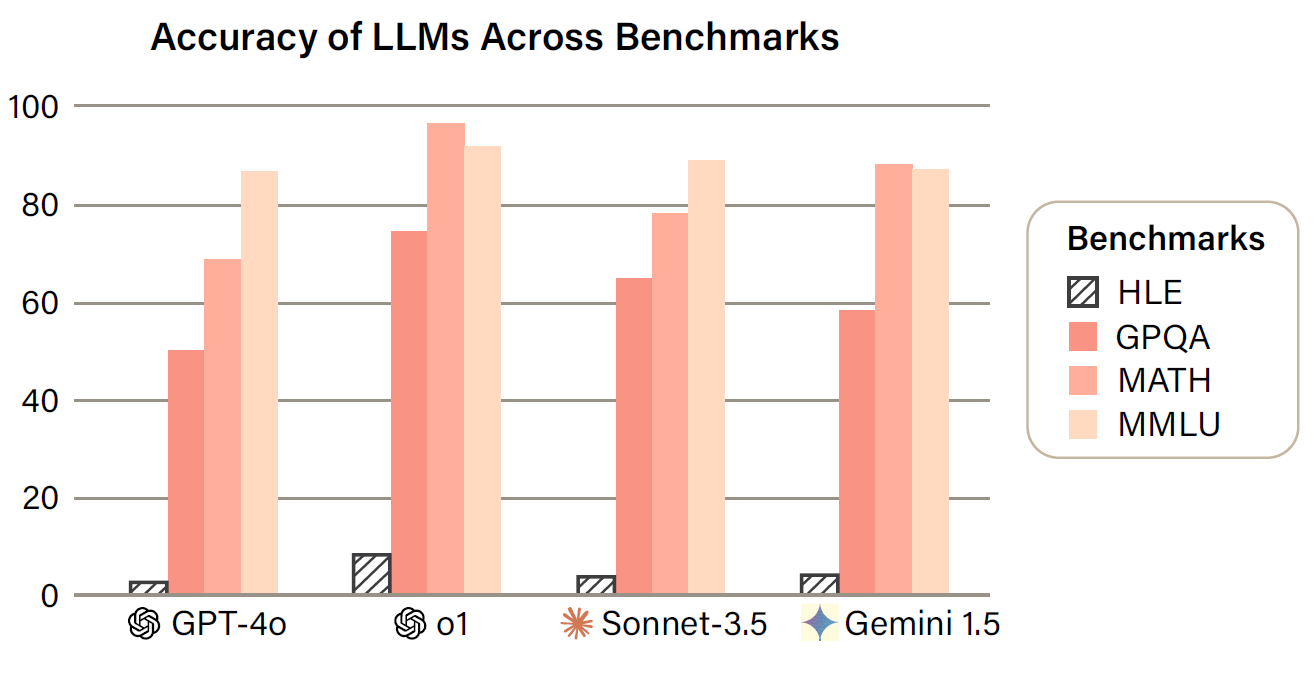
    The issue theme is large language models (LLMs) - their capabilities, limitations, benchmarks, methods to ensure their safety and value alignment with humans, and governance. Mercer et al. and Dario Amodei offer perspective on DeepSeek. Dan Hendrycks et al. take a very hard look at the geopolitics of AGI ('a coherent superintelligence strategy'), and Rehman et al. from RAND Corp. critique their proposal. Qureshi presents a framework for analyzing timelines predicting the advent of AGI. Humanity's Last Exam is a vast and open-ended compilation of 2700 questions 'at the frontier of human knowledge' to test AGI knowledge and reasoning capability. The Road to Artificial Superintelligence is a timely survey of safety & alighment methods.

    Future of Life Institute's Uuk et al. scanned the literature for practical, effective, broadly-applicable mitigations for AGI risk; their top three:  safety incident reports and security information sharing, third-party pre-deployment model audits, and pre-deployment risk assessments. Yoshua Bengio & team describe a computationally-efficient Bayesian ML program designed to assess risk probabilities of an agent's actions at runtime. What safety & alignment policies are actually in use at leading AI companies? See Anthropic's Responsible Scaling Policy

    Modeling and simulation are essential tools for AGI safety & alignment. Nasim et al. offer non-coders an open-source simulator for opinion dynamics researchers to analyze influence propagation and counter-misinformation strategies in social networks that including LLM agents (see FLI's new proposal to ban models with superhuman persuasion capability). 

    Preston Estep contributes to the theory of mind, examines differences between human and artificial intelligence, and looks at how non-human attributes of AI must be taken into account when predicting AGI risks.

  • Artificial General Intelligence Risks, Governance, Methods
    Vol. 1 No. 1 (2024)

    The first issue of AGI focuses on Risks, Governance, and Safety & Alignment Methods.