Blog/News

"Current AI models lack a stable internal model of truth." https://substack.com/@kris19/note/c-218514412?utm_source=notes-share-action&r=4fi6ez

"Impersonation is the core mechanism of modern fraud.... Video calls no longer provide verification. Deepfakes are good enough to fool careful observers in real-time conversations. The only reliable verification is out-of-band confirmation through channels you initiate and have verified, not channels someone else suggests. Creating a convincing fake identity used to require significant effort. Now, an LLM can generate a coherent backstory, unique writing style and technical knowledge base in seconds.

Add voice cloning, and you can sound exactly like a protocol founder on a Telegram call....

Scale became frictionless. Running parallel scam operations across time zones and languages used to require teams. Now one operator can manage dozens of marks simultaneously with AI handling translation, context switching and persona consistency....

AI capabilities will only improve from here. Voice cloning will get better. Deepfakes will become even harder to detect. LLMs will handle longer, more complex social engineering campaigns.

The fraud attack surface will continue to expand faster than the exploit attack surface because AI scales human manipulation better than it scales code auditing." -  Jurica Dujmovic, Weiss Crypto Investor

Justin Thaler, a16zcrypto: 

A cryptographically relevant quantum computer (CRQC) in the 2020s is highly unlikely, despite high-profile claims otherwise.

By a “cryptographically relevant quantum computer” I mean a fault-tolerant, error-corrected quantum computer capable of running Shor’s algorithm at scales sufficient to attack elliptic curve cryptography or RSA within a reasonable timeframe (e.g., breaking secp256k1 or RSA-2048 with at most, say, one month of sustained computation).

We are nowhere near a cryptographically relevant quantum computer by any reasonable reading of public milestones and resource estimates. Companies sometimes claim a CRQC is likely before 2030 or well before 2035, but publicly known progress doesn’t support those claims.

For context, across all current architectures — trapped ions, superconducting qubits, and neutral atom systems — no quantum computing platform today comes close to the hundreds of thousands to millions of physical qubits (depending on error rates and error-correction schemes) required to run Shor’s algorithm on RSA-2048 or secp256k1.

Read more here.

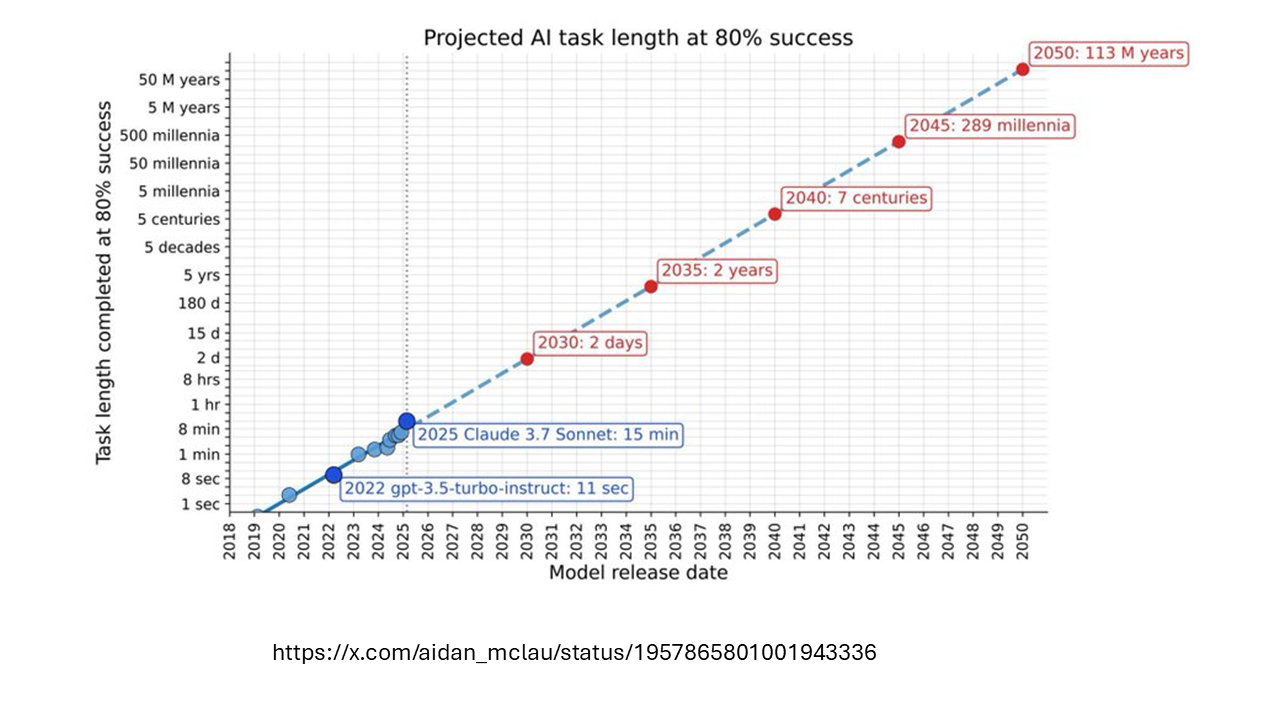
Aidan McLaughlin Extrapolation of AI 80pc Task Completion Duration

And a rebuttal by @terafoenix:

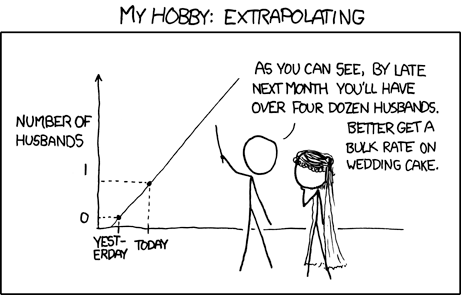
Perils of Extrapolation by @terafoenix

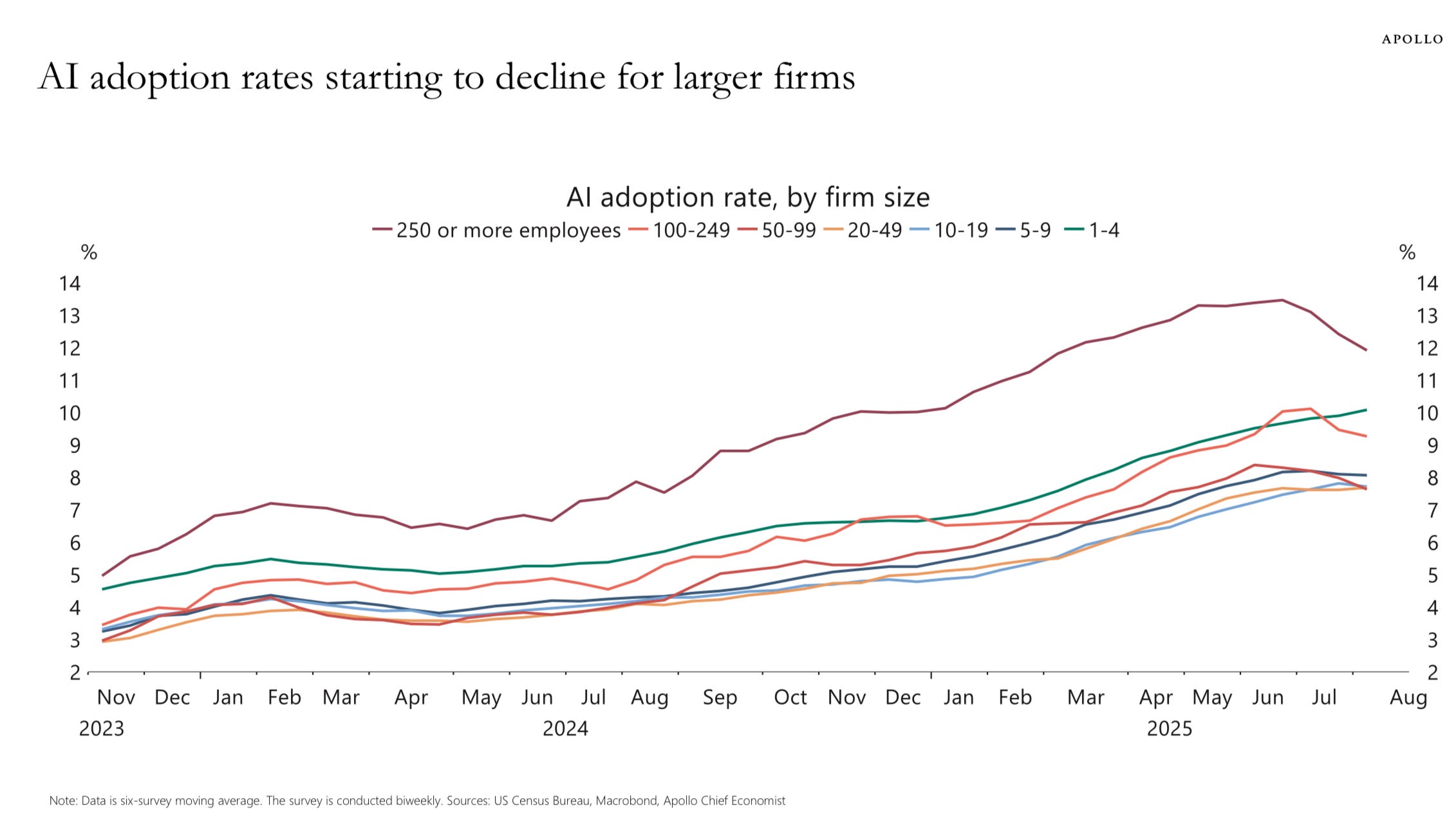
6-month moving average AI adoption rate by business by number of employees

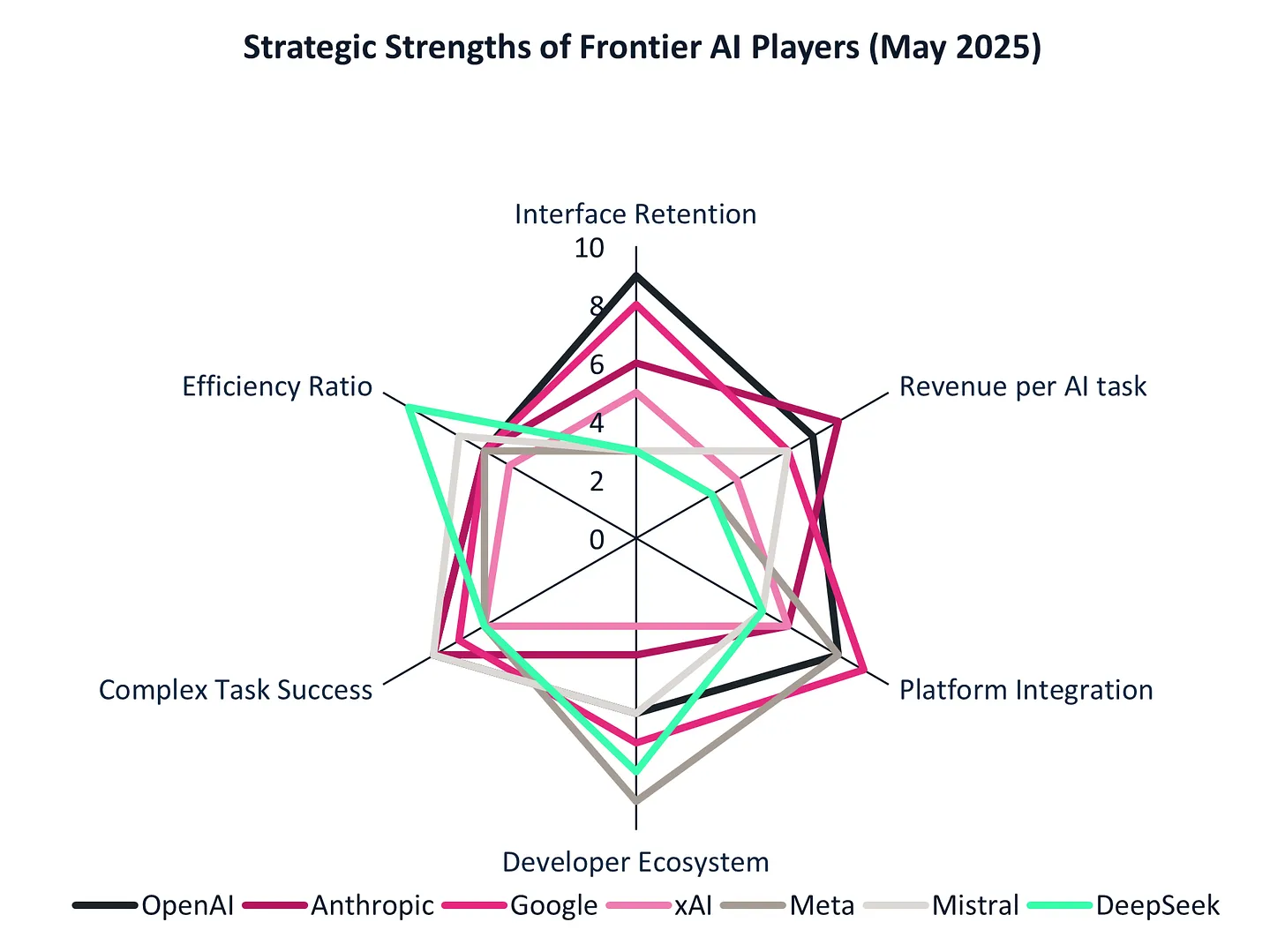
decoding-discontinuity-strategic-strengths-of-frontier-players-may-2025

Source: Decoding Discontinuity

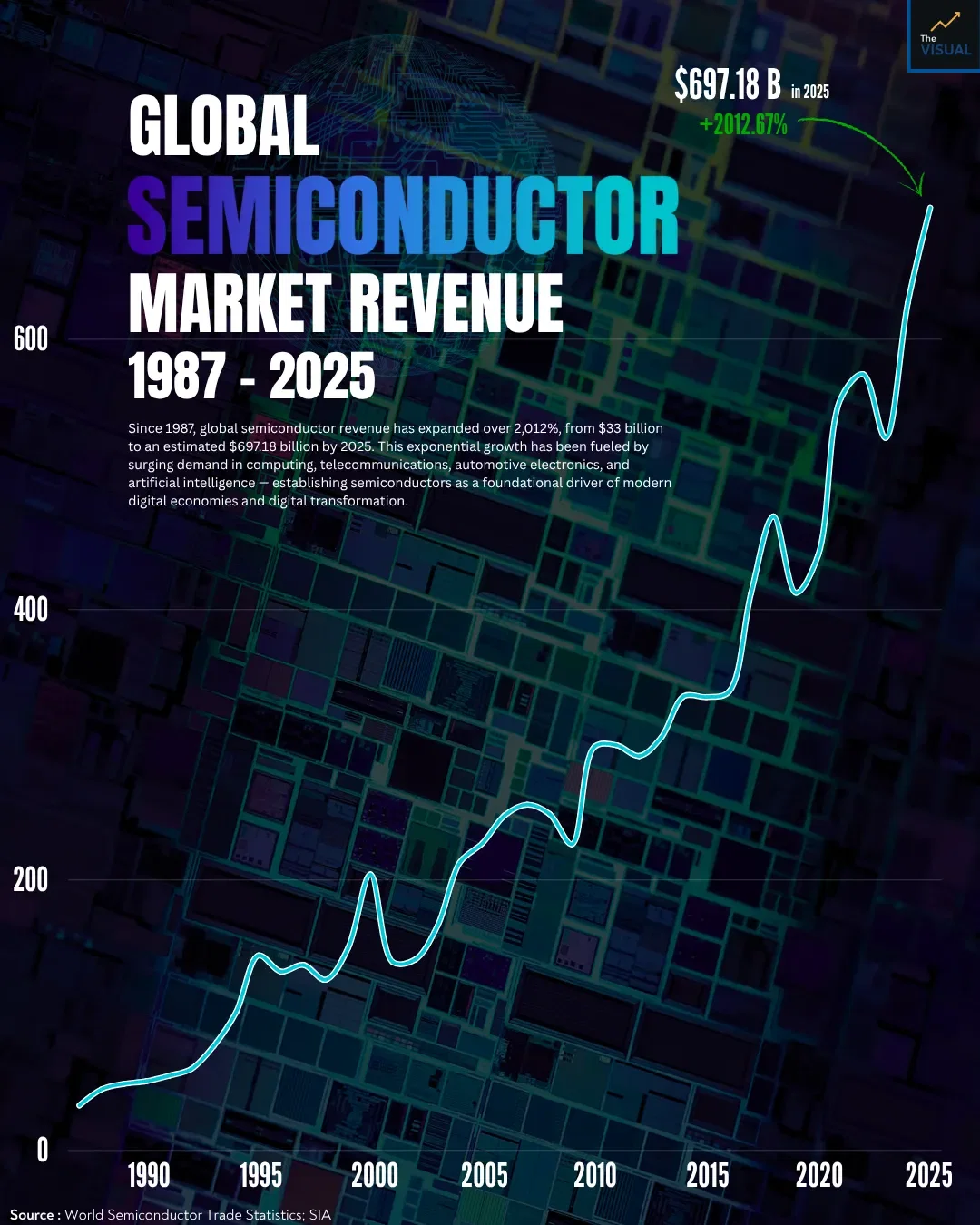
Voronoi figure. From $33 billion in 1987 to an estimated $697.18 billion in 2025 — that’s a +2,012.67% growth in the global semiconductor market.

Fueled by the rise of AI, automotive electronics, cloud computing, and smart devices, semiconductors have become the foundation of modern digital economies.